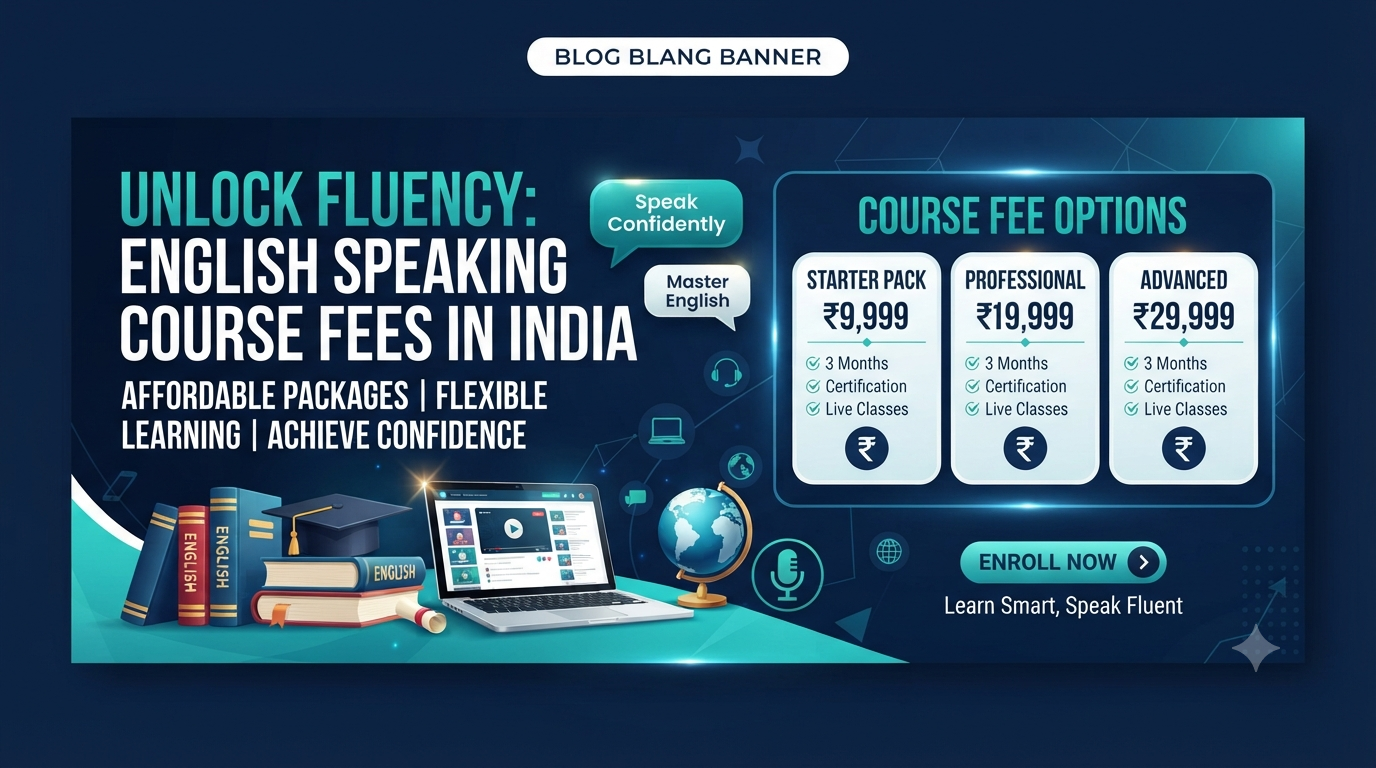
English Speaking Course Fees in India 2026 | Fee Structure
If you are planning to improve your communication skills this year, the first question is usually about money. English speaking course fees in India vary a lot, and a low number on a banner does not always mean good value. This guide explains the real fee structure, the typical spoken English course price you should expect, how English classes cost India learners differently online and offline, and which installment options, free demo class and refund policy questions to ask before you pay.
Whether you are a student, a working professional or a homemaker, understanding English speaking course fees helps you compare institutes fairly and avoid hidden charges.
What Are Typical English Speaking Course Fees in India in 2026?
English speaking course fees in India in 2026 usually fall between ₹3,000 and ₹30,000, depending on duration, batch size, trainer quality and mode of learning. These figures are indicative market ranges, not a price list of any single institute. A basic group course sits at the lower end, while a personalised professional program sits at the higher end.
Here is a simple view of the common fee structure across the country:
| Course type | Duration | Indicative fee range |
| Basic spoken English (group) | 2 to 3 months | ₹3,000 to ₹8,000 |
| Advanced fluency and interview training | 3 to 4 months | ₹8,000 to ₹18,000 |
| Business and professional communication | 3 to 6 months | ₹12,000 to ₹30,000 |
| One-to-one coaching | Flexible | ₹15,000 and above |
Spoken English Course Price: What Decides the Number?
The spoken English course price is not random. Several practical factors decide it, and knowing them lets you judge whether English speaking course fees are fair.
Batch size
Small batches of eight to twelve learners cost more than crowded classrooms of thirty. Yet a small batch buys you more speaking time, and speaking time is what actually builds fluency.
Trainer experience
Certified trainers who correct pronunciation, grammar and confidence in real time charge more.
Course duration and level
A beginner program is shorter and cheaper. An advanced program with interview practice, presentations and business writing naturally raises the overall cost.
Study material and assessments
Some institutes include worksheets, recordings and mock speaking tests in the price. Others charge extra. Always ask what is included.
English Classes Cost India: City-Wise Reality
When people search for how much English classes cost India wide, they often find confusing answers. The truth is that learners pay different amounts because of location and delivery mode.
In tier-one cities, offline English speaking course fees are highest. In tier-two cities, the same course may cost thirty to forty percent less. Online batches usually sit in the middle and give you access to strong trainers without travel.
A cheap course with forty students and no speaking practice wastes both time and money. Compare the fees against hours of live practice, feedback quality and batch size.
Online vs Offline Pricing: Which Is Better Value?
The debate on online vs offline pricing is one of the most common questions from learners. Both formats work well when the batch is small and interactive.
Online pricing
Online classes usually cost ten to twenty-five percent less. You save on travel, and you can join from anywhere in India. In this comparison, online wins on convenience and flexible timings, and the fees stay lower because there is no classroom overhead.
Offline pricing
Classroom batches cost more, but they offer face-to-face interaction, group activities and a focused environment. If you struggle with self-discipline, the higher fees for offline learning may be worth it.
How to decide
Match the format to your budget, internet quality and self-discipline.
Understanding the Fee Structure Before You Enrol
A transparent fee structure should show every charge upfront. Before paying, ask for a written breakdown covering the following:
- Registration or admission charge
- Monthly or full-course tuition
- Study material and assessment costs
- Certificate fees, if any
- Taxes such as GST
- Late payment charges on installments
If an institute cannot explain its charges clearly, treat it as a warning sign. Good institutes are happy to share it in writing, and they explain why their prices are set where they are.
Installment Options: Making Fees Manageable
Many learners cannot pay the full amount at once. That is why installment options matter. A good institute offers flexible payment plans so that fees do not become a barrier to learning.
Common installment options include:
- Two-part payment: Half at admission, half after the first month.
- Monthly payment: Equal monthly amounts across the course duration.
- Early-bird discount: A lower fee for paying in full upfront.
- No-cost EMI: Offered by some larger institutes through partner banks or apps.
Before choosing a plan, check whether interest, processing fees or penalties apply. The best plans carry no hidden cost and keep the total equal to the full-payment price.
Free Demo Class: Try Before You Pay
A free demo class is the smartest way to judge value before you commit. Since this is a real investment, a trial lesson lets you experience the teaching style first.
During the free demo class, observe these things:
- Does the trainer make you speak, or only lecture?
- Is the batch small enough for individual attention?
- Are corrections given politely and clearly?
- Does the level match your current ability?
Reputable institutes offer one for both online and offline batches. If an institute refuses a trial lesson, or pressures you to pay on the spot, look elsewhere. You can book a free demo class at The Professional English, which has taught spoken English in Delhi and live online across India since 2014.
Refund Policy: What to Check
Life is unpredictable, so a clear refund policy protects you. Never pay without reading the terms first.
A fair policy usually answers these questions:
- Is a refund possible after the trial if you decide not to continue?
- Is there a cooling-off window of a few days after admission?
- Are registration charges refundable?
- How are unused months treated if you leave midway?
- How many working days does a refund take?
Ask for the refund policy in writing and keep a copy along with your fee receipt. A transparent policy is a strong sign of a trustworthy institute. Confirm the exact terms, payment plans and current charges directly with the institute, since terms can change.
How to Compare English Speaking Course Fees Smartly
Use this quick checklist when comparing institutes:
- Compare the total cost, not only the headline monthly amount.
- Divide English speaking course fees by total live class hours to find the cost per hour.
- Check batch size and trainer certification.
- Take a free demo class at two or three institutes.
- Read the terms and ask about payment plans.
- Compare online vs offline pricing for the same syllabus.
- Look for real reviews and student outcomes.
This method turns confusing English speaking course fees into a clear decision. A price that looks high may actually cost less per hour than a cheaper alternative.
Is Paying Higher English Speaking Course Fees Worth It?
For many learners, yes. Better English can open doors to interviews, promotions, study abroad and stronger confidence. Spending a little more on a small batch, experienced trainers and a proper plan often gives a faster return than a discount course you abandon after two weeks.
Still, expensive does not always mean better. The right English speaking course fees are the ones that match your goal, your schedule and your budget, with fair refund terms and a free demo class to prove the quality.
Budgeting Tips for English Speaking Course Fees
Set a realistic budget before you shortlist institutes. Decide how much you can spend on English speaking course fees each month, then look for programs that fit that number. Remember that English speaking course fees should be judged against the outcome you want, such as clearing interviews or speaking confidently at work.
Many learners also ask whether discounts are genuine. Seasonal offers can lower English speaking course fees, but always confirm what the discounted price includes. If a discount removes speaking practice or shrinks the syllabus, it is not a real saving. Similarly, group offers for friends or colleagues can reduce English speaking course fees per person, so ask about them.
Finally, keep records. Save the written quote, your receipt and any message confirming the fee structure. If a question arises later, these papers protect you and keep the English speaking course fees you agreed on clear for both sides.
Conclusion: Choose the Right English Speaking Course Fees for Your Goal
English speaking course fees in India 2026 are easier to judge when you understand the fee structure, compare online vs offline pricing and check the spoken English course price against real value. Look for clear installment options, a free demo class and a fair refund policy, and remember that English classes cost India learners differently depending on city and mode.