English Speaking Course Fees in India 2026

English Speaking Course Fees in India 2026 | Fee Structure

If you are planning to improve your communication skills this year, the first question is usually about money. English speaking course fees in India vary a lot, and a low number on a banner does not always mean good value. This guide explains the real fee structure, the typical spoken English course price you should expect, how English classes cost India learners differently online and offline, and which installment options, free demo class and refund policy questions to ask before you pay.

Whether you are a student, a working professional or a homemaker, understanding English speaking course fees helps you compare institutes fairly and avoid hidden charges.

What Are Typical English Speaking Course Fees in India in 2026?

English speaking course fees in India in 2026 usually fall between ₹3,000 and ₹30,000, depending on duration, batch size, trainer quality and mode of learning. These figures are indicative market ranges, not a price list of any single institute. A basic group course sits at the lower end, while a personalised professional program sits at the higher end.

Here is a simple view of the common fee structure across the country:

Course type Duration Indicative fee range
Basic spoken English (group) 2 to 3 months ₹3,000 to ₹8,000
Advanced fluency and interview training 3 to 4 months ₹8,000 to ₹18,000
Business and professional communication 3 to 6 months ₹12,000 to ₹30,000
One-to-one coaching Flexible ₹15,000 and above

Spoken English Course Price: What Decides the Number?

The spoken English course price is not random. Several practical factors decide it, and knowing them lets you judge whether English speaking course fees are fair.

Batch size

Small batches of eight to twelve learners cost more than crowded classrooms of thirty. Yet a small batch buys you more speaking time, and speaking time is what actually builds fluency.

Trainer experience

Certified trainers who correct pronunciation, grammar and confidence in real time charge more.

Course duration and level

A beginner program is shorter and cheaper. An advanced program with interview practice, presentations and business writing naturally raises the overall cost.

Study material and assessments

Some institutes include worksheets, recordings and mock speaking tests in the price. Others charge extra. Always ask what is included.

English Classes Cost India: City-Wise Reality

When people search for how much English classes cost India wide, they often find confusing answers. The truth is that learners pay different amounts because of location and delivery mode.

In tier-one cities, offline English speaking course fees are highest. In tier-two cities, the same course may cost thirty to forty percent less. Online batches usually sit in the middle and give you access to strong trainers without travel.

A cheap course with forty students and no speaking practice wastes both time and money. Compare the fees against hours of live practice, feedback quality and batch size.

Online vs Offline Pricing: Which Is Better Value?

The debate on online vs offline pricing is one of the most common questions from learners. Both formats work well when the batch is small and interactive.

Online pricing

Online classes usually cost ten to twenty-five percent less. You save on travel, and you can join from anywhere in India. In this comparison, online wins on convenience and flexible timings, and the fees stay lower because there is no classroom overhead.

Offline pricing

Classroom batches cost more, but they offer face-to-face interaction, group activities and a focused environment. If you struggle with self-discipline, the higher fees for offline learning may be worth it.

How to decide

Match the format to your budget, internet quality and self-discipline.

Understanding the Fee Structure Before You Enrol

A transparent fee structure should show every charge upfront. Before paying, ask for a written breakdown covering the following:

  • Registration or admission charge
  • Monthly or full-course tuition
  • Study material and assessment costs
  • Certificate fees, if any
  • Taxes such as GST
  • Late payment charges on installments

If an institute cannot explain its charges clearly, treat it as a warning sign. Good institutes are happy to share it in writing, and they explain why their prices are set where they are.

Installment Options: Making Fees Manageable

Many learners cannot pay the full amount at once. That is why installment options matter. A good institute offers flexible payment plans so that fees do not become a barrier to learning.

Common installment options include:

  1. Two-part payment: Half at admission, half after the first month.
  2. Monthly payment: Equal monthly amounts across the course duration.
  3. Early-bird discount: A lower fee for paying in full upfront.
  4. No-cost EMI: Offered by some larger institutes through partner banks or apps.

Before choosing a plan, check whether interest, processing fees or penalties apply. The best plans carry no hidden cost and keep the total equal to the full-payment price.

Free Demo Class: Try Before You Pay

A free demo class is the smartest way to judge value before you commit. Since this is a real investment, a trial lesson lets you experience the teaching style first.

During the free demo class, observe these things:

  • Does the trainer make you speak, or only lecture?
  • Is the batch small enough for individual attention?
  • Are corrections given politely and clearly?
  • Does the level match your current ability?

Reputable institutes offer one for both online and offline batches. If an institute refuses a trial lesson, or pressures you to pay on the spot, look elsewhere. You can book a free demo class at The Professional English, which has taught spoken English in Delhi and live online across India since 2014. 

Refund Policy: What to Check

Life is unpredictable, so a clear refund policy protects you. Never pay without reading the terms first.

A fair policy usually answers these questions:

  • Is a refund possible after the trial if you decide not to continue?
  • Is there a cooling-off window of a few days after admission?
  • Are registration charges refundable?
  • How are unused months treated if you leave midway?
  • How many working days does a refund take?

Ask for the refund policy in writing and keep a copy along with your fee receipt. A transparent policy is a strong sign of a trustworthy institute. Confirm the exact terms, payment plans and current charges directly with the institute, since terms can change.

How to Compare English Speaking Course Fees Smartly

Use this quick checklist when comparing institutes:

  1. Compare the total cost, not only the headline monthly amount.
  2. Divide English speaking course fees by total live class hours to find the cost per hour.
  3. Check batch size and trainer certification.
  4. Take a free demo class at two or three institutes.
  5. Read the terms and ask about payment plans.
  6. Compare online vs offline pricing for the same syllabus.
  7. Look for real reviews and student outcomes.

This method turns confusing English speaking course fees into a clear decision. A price that looks high may actually cost less per hour than a cheaper alternative.

Is Paying Higher English Speaking Course Fees Worth It?

For many learners, yes. Better English can open doors to interviews, promotions, study abroad and stronger confidence. Spending a little more on a small batch, experienced trainers and a proper plan often gives a faster return than a discount course you abandon after two weeks.

Still, expensive does not always mean better. The right English speaking course fees are the ones that match your goal, your schedule and your budget, with fair refund terms and a free demo class to prove the quality.

Budgeting Tips for English Speaking Course Fees

Set a realistic budget before you shortlist institutes. Decide how much you can spend on English speaking course fees each month, then look for programs that fit that number. Remember that English speaking course fees should be judged against the outcome you want, such as clearing interviews or speaking confidently at work.

Many learners also ask whether discounts are genuine. Seasonal offers can lower English speaking course fees, but always confirm what the discounted price includes. If a discount removes speaking practice or shrinks the syllabus, it is not a real saving. Similarly, group offers for friends or colleagues can reduce English speaking course fees per person, so ask about them.

Finally, keep records. Save the written quote, your receipt and any message confirming the fee structure. If a question arises later, these papers protect you and keep the English speaking course fees you agreed on clear for both sides.

Conclusion: Choose the Right English Speaking Course Fees for Your Goal

English speaking course fees in India 2026 are easier to judge when you understand the fee structure, compare online vs offline pricing and check the spoken English course price against real value. Look for clear installment options, a free demo class and a fair refund policy, and remember that English classes cost India learners differently depending on city and mode.
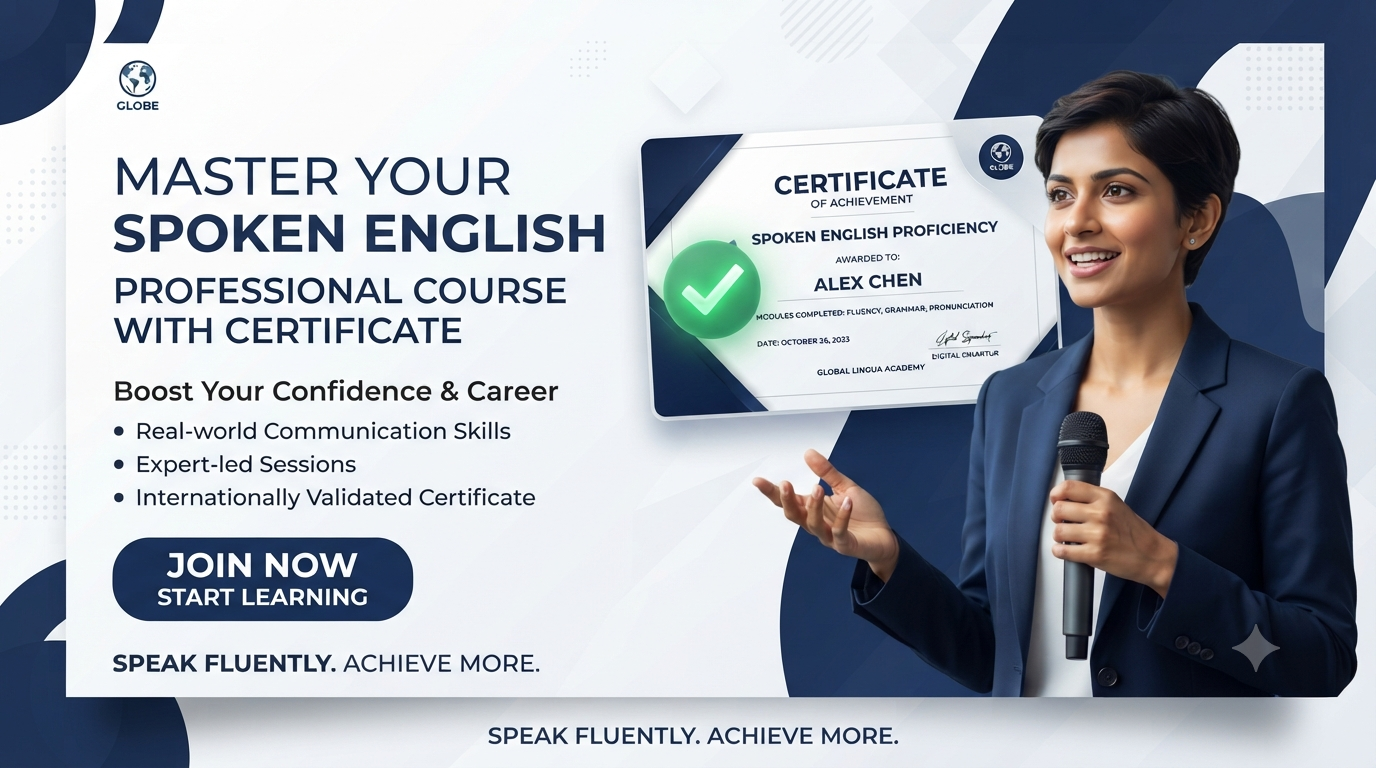

Spoken English Course With Certificate

Spoken English Course With Certificate – Is It Worth It?

If you have been comparing options online, you have probably noticed how many platforms now offer a spoken english course with certificate at the end. The promise is simple: improve your fluency, then walk away with proof of it. But is that proof actually worth anything, or is it just a downloadable PDF that looks nice on LinkedIn? This guide breaks down what these programs really offer, how certification works, and whether it is a smart investment for your career or personal growth.

What Is a Spoken English Course With Certificate?

A spoken english course with certificate is a structured learning program — usually delivered online — that combines speaking practice, grammar correction, vocabulary building, and pronunciation coaching with a formal document issued once you complete the syllabus. Unlike a casual YouTube playlist or a free app, these courses are built around milestones: modules, assessments, and a final evaluation that determines whether you earn your certificate.

The certificate itself typically states your name, the course duration, the skills covered (fluency, listening, grammar, pronunciation), and sometimes your final score. Some institutes issue a simple course completion certificate, while others go further and offer an english course certification that is benchmarked against recognized global frameworks like CEFR (Common European Framework of Reference for Languages).

Why People Choose a Certified English Speaking Course

There are a few clear reasons learners gravitate toward a certified english speaking course instead of free, unstructured resources:

  • Accountability — deadlines and graded speaking tasks push you to actually practice, rather than passively consuming content.
  • Structured progression — lessons build on each other instead of jumping randomly between topics.
  • Proof for employers — a certificate gives recruiters a quick, tangible signal of your spoken English ability.
  • Confidence boost — completing assessments and receiving feedback helps learners trust their own progress.
  • Career mobility — many customer service, aviation, hospitality, and BPO roles list English certification as a preferred (sometimes mandatory) qualification.

For working professionals especially, a certified english speaking course can be the difference between simply “knowing English” and being able to demonstrate it convincingly during an interview.

Does the Certificate Actually Carry Weight?

This is where most people get confused, and it is the real question behind “is it worth it.” Not all certificates are equal. A course completion certificate only confirms that you attended and finished the classes — it says nothing about your actual proficiency level. On the other hand, a recognized certification is backed by a standardized test, a defined scoring rubric, and often an accredited assessment body.

Before enrolling, ask the provider these questions:

  1. Is this a course completion certificate or a scored, level-based recognized certification?
  2. Does the certificate reference an established framework (CEFR, IELTS-aligned bands, etc.)?
  3. Can the certificate be verified online by a third party, such as an employer or university?
  4. Is the final assessment supervised, such as through an online proctored test, or is it self-graded?

If a provider cannot answer these clearly, the certificate is likely more of a participation memento than a credential that will move the needle professionally.

How Online Proctored Tests Improve Credibility

One feature that separates a genuinely valuable spoken english course with certificate from a low-effort one is the assessment method. Many reputable platforms now use an online proctored test for the final speaking and listening evaluation. This means a live or AI-monitored session verifies your identity, checks your surroundings, and observes your responses in real time — much like a formal exam hall, but conducted remotely.

An online proctored test matters because it prevents shortcuts. Without supervision, anyone could have a friend answer questions or read from a script, making the resulting certificate meaningless. With proctoring, employers and institutions can trust that the score reflects the learner’s actual spoken ability, not a rehearsed or assisted performance.

Recognized Certification vs. Generic Certificates

The phrase recognized certification gets used loosely in marketing, so it is worth understanding what it should actually mean. A genuinely recognized certification is one that:

  • Is issued or endorsed by an established language-training body or accredited institute
  • Maps to an internationally understood proficiency scale
  • Is accepted by employers, universities, or immigration bodies as valid proof of ability
  • Includes a verifiable certificate ID or online lookup system

Meanwhile, a generic english course certification produced entirely in-house, with no external benchmarking, may still be useful for personal motivation — but you should not expect it to carry the same weight on a resume as a recognized certification from a well-established provider.

Is It Worth the Money?

Whether a spoken english course with certificate is worth paying for depends largely on your goals:

It is likely worth it if you:

  • Need proof of spoken English ability for a job application, promotion, or visa process
  • Struggle with self-discipline and benefit from structured deadlines
  • Want feedback from real instructors rather than an app’s automated scoring
  • Plan to pursue further education or roles where a recognized certification is explicitly requested

It may not be necessary if you:

  • Already have strong, demonstrable fluency (e.g., through work experience or an existing IELTS/TOEFL score)
  • Only want casual conversation practice with no formal requirement
  • Are looking for a shortcut rather than genuine skill-building — no certificate can substitute for actual practice

At theprofessionalenglish.com, the goal of any certified english speaking course should be twofold: real fluency improvement and a credential that stands up to scrutiny, backed by an online proctored test rather than a self-assessed quiz.

How to Choose the Right Course 

Before enrolling in any spoken english course with certificate, compare providers using this checklist:

  1. Curriculum depth — does it cover pronunciation, grammar, listening, and real conversation practice, not just vocabulary lists?
  2. Instructor quality — are sessions led by qualified, experienced trainers?
  3. Assessment integrity — is the final test an online proctored test, and is the score independently verifiable?
  4. Certificate recognition — is it a basic course completion certificate, or genuine recognized certification?
  5. Reviews and outcomes — do past learners report real fluency gains, or just a certificate with no noticeable improvement?

Final Verdict

A spoken english course with certificate is worth it when the certificate is backed by genuine assessment — ideally a recognized certification validated through an online proctored test — and when the course itself delivers real fluency improvement, not just a document. Treat the certificate as a bonus outcome of solid learning, not the sole reason to enroll.

Frequently Asked Questions

Is a spoken English course with certificate recognized by employers?

It depends on the provider. Employers generally value certificates tied to a recognized certification framework and a supervised online proctored test far more than a basic course completion certificate with no verification.

How long does it take to complete a certified English speaking course?

Most programs range from 4 to 12 weeks, depending on your starting level and how many hours per week you can dedicate to practice and assessments.

What is the difference between a completion certificate and a recognized certification?

A course completion certificate simply confirms attendance and course completion. A recognized certification involves a standardized, scored assessment — often an online proctored test — benchmarked against an established proficiency scale.

Can I use this certificate for university or visa applications?

Only if it qualifies as a genuine recognized certification issued by an accredited body. Always confirm acceptance criteria with the specific institution or immigration authority beforehand.

Do online proctored tests really prevent cheating?

Yes. An online proctored test monitors identity, environment, and real-time responses, making the resulting english course certification far more trustworthy than an unsupervised, self-graded quiz.

English Speaking Classes for Housewives

English Speaking Classes for Housewives | Flexible Online Batches

 The best English speaking classes for housewives combine flexible timing, live conversation practice and gentle correction. Look for online batches that fit around school runs and chores, 20 to 40 minutes of speaking each day, and a trainer who builds confidence first and fixes grammar second.

You follow the school notice perfectly. You understand the doctor when she explains the prescription. Then someone asks you a simple question out loud, and your mind goes blank.

Sound familiar? It happens to smart, capable homemakers every single day, and it has nothing to do with intelligence. This guide explains how English speaking classes for housewives really work, what to look for, and how flexible online batches make room for learning when your day belongs to everyone else first.

Why Demand for English Speaking Classes for Housewives Keeps Rising

Start with two numbers.

India’s Time Use Survey 2024, released by MoSPI, found that women spend about 289 minutes a day on unpaid domestic work. Men spend 88. That’s nearly five hours of cooking, cleaning and running the house, before anyone counts caregiving. Worth noting: these are averages across all women, not only homemakers. So no, homemakers don’t lack ambition. They lack a free two-hour slot at 6 PM, which is when many physical institutes hold class.

The second number: Census 2011 recorded roughly one in ten Indians as knowing English. Since then, English has crept into school apps, society WhatsApp groups, hospital forms and Swiggy chats. In many homes, all of that admin lands on the homemaker.

The same survey put women’s caregiving at 137 minutes a day. Stack that on top of the chores and the picture is clear: learning has to fit into gaps, not blocks. Rigid timetables were never built for that day. Online English speaking classes for housewives were.

Here’s the thing. The people who meet English most often at home get the least chance to practise it. Honestly, that mismatch is why English speaking classes for housewives have moved online so quickly.

It Isn’t Your Grammar: What Really Holds Homemakers Back

Picture a woman I’ll call Meena. She lives in Noida, studied in an English-medium school, and hasn’t spoken English at length in fifteen years. (Meena is a composite, not a real student, but her story is painfully common.) She reads English fine. She follows English shows without subtitles. Yet at the parent-teacher meeting, she nods, smiles and says almost nothing.

Why? Fear. Not of English, but of being judged for one wrong tense.

That’s a confidence problem wearing a grammar costume. And I’d argue it’s the biggest misunderstanding in this whole space. Learners assume they need months of drills before they can speak. In reality, they need permission to be wrong out loud. So good English speaking classes for housewives put speaking first and rules second. Confidence building isn’t a bonus module. It’s the method.

Here’s what a first class should feel like: a trainer who asks about your day, waits patiently through your pauses, and cheers for a half-finished sentence. If a class makes you feel smaller, it’s the wrong class, however polished the syllabus looks. English speaking classes for housewives should feel like a judgement-free room.

What Good English Speaking Classes for Housewives Should Include

Not every course earns your time. Here’s what to look for:

  • Live speaking from day one. Watching videos is studying English, not speaking it.
  • Daily conversation practice. Real scenes: greeting neighbours, asking a teacher a question, booking a clinic slot, bargaining at the sabzi market.
  • Gentle correction. A trainer should fix patterns, not interrupt every sentence.
  • Level-based batches. A beginner shouldn’t sit beside someone rehearsing interviews.
  • Pronunciation help. Small tweaks to sounds make you far easier to understand.
  • Visible progress. A short speaking check-in every few weeks beats vague promises.

Let’s be honest: most people pick a course by price or by whichever ad reached them first. Pick by speaking time instead. Count how many minutes you talk in a session. That number predicts results better than any brochure, and it’s the first thing to compare across English speaking classes for housewives.

Flexible Timing: How Online Batches Fit Around Your Day

Flexible timing isn’t a perk. For homemakers, it’s the whole point. A class you can’t attend regularly is a class you’ll quit by week three.

Online batches fix the travel problem first. No auto ride, no parking, no changing clothes. You log in from the kitchen table with your chai. Then they fix the schedule problem, because every home runs on a different clock.

Table 1: Sample batch windows for homemakers

Batch window Who it suits It fits around
Mid-morning Mothers of school-going kids School drop-off and breakfast cleanup
Early afternoon Homemakers with a quiet gap Post-lunch rest, before pick-up
Late afternoon Women with kids at home Nap time or tuition hours
Evening Working women and work from home moms After the workday, before dinner
Weekend Anyone with a packed weekday Days when family can share the load

Pick a slot you can hold for three months. Two live sessions a week plus daily practice will outperform a crash course you abandon in week two.

One more thing to check: what happens when you miss a session? Kids fall sick. Guests arrive. Any of the English speaking classes for housewives you shortlist should let you swap a batch without drama.

Spoken English for Homemakers: A Simple 90-Day Roadmap

Spoken English for homemakers doesn’t need a grand plan. It needs a sensible order. This is the sequence that tends to work.

Days 1 to 30: Comfort First

Speak in short sentences. Introduce yourself, describe your morning, name what’s in your kitchen. No grammar lectures yet. The goal is hearing your own voice in English without flinching. Expect awkward. Expect it to fade by week three.

Days 31 to 60: Real Conversations

Now daily conversation practice gets specific. Role-play the paediatrician visit, the complaint call to the gas agency, the chat with a new neighbour. Grammar shows up here, but only where your mistakes actually live: tenses, prepositions, question forms.

Days 61 to 90: Confidence in the Wild

Step outside the classroom. Order something over the phone in English. Speak up once at the next school meeting. Record a one-minute voice note about your week and compare it with your Day 1 recording. That comparison alone convinces most learners.

Which brings us to a fair question: is ninety days enough for fluency? No. It’s enough for confidence, and confidence is what opens up everything after. The best English speaking classes for housewives build that first.

An English Course for Women Who Work From Home

Plenty of homemakers now earn from home. They run Instagram boutiques, resell on Meesho, tutor neighbourhood kids, freelance as writers or handle chat support. For work from home moms, English brings a different kind of pressure. A client call doesn’t wait while you rehearse a sentence.

Imagine a mother in Pune who sells handmade candles on Instagram. A buyer from Dubai messages about a bulk order. She understands every word, then freezes on the call and lets the deal slide. One lost order. Multiply that across a year, and you see why English speaking classes for housewives who freelance should teach business talk early.

An English course for women in this group needs a sharper focus:

  • Client calls: opening, clarifying and closing politely.
  • Price talk: quoting your rate without apologising for it.
  • Written English: short emails and WhatsApp business messages.
  • Phone nerves: staying calm when the toddler is screaming in the next room. (Yes, really.)

Time is tighter here too, so short evening online batches and 20-minute daily drills beat long weekend marathons. The way I look at it, waiting for “perfect” English is the most expensive habit a freelancer can have. Start imperfect and get paid. If your goal is study or work abroad, IELTS coaching is the natural next step after your English speaking classes for housewives.

Daily Conversation Practice: Twenty Minutes That Change Everything

Classes give you structure. Daily conversation practice gives you results. Twenty minutes is plenty, as long as you show up every day.

  1. Narrate your cooking. “I’m chopping onions. Now I’m heating the oil.” Silly? Yes. Effective? Also yes.
  2. Send one voice note. Pick a friend who won’t judge and send a 30-second update in English.
  3. Shadow a speaker. Play a short YouTube clip and repeat it a beat behind, copying the rhythm.
  4. Keep a sentence jar. Write five new phrases on paper slips daily and use each one aloud before bed.
  5. Talk to the mirror. It feels odd for three days. Then it doesn’t.

Do the maths. And yes, it’s simple: twenty minutes a day for 90 days adds up to 30 hours of speaking. Few English speaking classes for housewives can promise that much talking time on their own, which is why home practice matters so much.

Choosing English Speaking Classes for Housewives: 1-on-1, Batch or App?

Formats of English speaking classes for housewives differ more than the ads admit. Here’s an honest side-by-side.

Table 2: Learning formats compared

Format Your speaking time Typical cost Best for Watch out for
Live 1-on-1 Highest Highest; many plans start near ₹4,000 a month Extreme shyness No peer practice
Live online batch Shared with peers Mid-range Confidence alongside others Oversized batches
Recorded course or app None with real people Lowest Vocabulary and listening Nobody to talk to

That said, apps have a place. My take? They’re great for vocabulary and terrible for speaking. If talking is the goal, choose a live format. Small live batches often hit the sweet spot, because you hear other beginners make the same mistakes, which is oddly comforting.

One caution: cheap isn’t always cheap. A recorded course you never finish costs more per useful hour than a live batch you attend twice a week. When comparing English speaking classes for housewives, divide the fee by the hours you’ll actually speak.

Common Mistakes That Slow Learners Down

Even motivated learners lose months to a few avoidable habits.

  • Waiting to feel ready. You won’t. Start speaking before you feel fluent.
  • Translating in your head. Thinking in Hindi first and converting adds a delay. Practise thinking in short English phrases instead.
  • Chasing accent over clarity. Nobody needs to sound British. They need to understand you.
  • Skipping revision. New phrases fade fast unless you reuse them within a day or two.

In my view, most learners who quit don’t quit because English is hard. They quit because the routine never fit their day. That’s the case for choosing English speaking classes for housewives built around real homemaker schedules instead of office hours.

A Realistic Day: Fitting English Around Your Routine

Wondering where twenty minutes will come from? Try this sample day:

  • 7:30 AM: Narrate breakfast prep aloud for five minutes.
  • 10:30 AM: Join your online batch after the school drop-off.
  • 1:30 PM: Shadow one short clip while folding laundry.
  • 4:30 PM: Send a voice note to a friend.
  • 9:30 PM: Add five phrases to the sentence jar.

Nothing here needs a free afternoon. It slots into tasks you already do. That’s how English speaking classes for housewives turn into a habit instead of another item on the to-do list.

Five Questions to Ask Before Joining English Speaking Classes for Housewives

  1. Can I attend a trial class first?
  2. How many learners are in a batch?
  3. What happens if I miss a session?
  4. How will the trainer track my progress?
  5. Do you teach real situations, or only textbook dialogues?

Any institute running English speaking classes for housewives should answer all five without hesitation. If they dodge, keep looking.

Ready to Start? Your First Sentence Is Closer Than You Think

Nobody hands you a spare hour. You have to carve it out, and that takes courage. But English speaking classes for housewives exist so you don’t have to do it alone, or on someone else’s schedule. Flexible online batches, daily conversation practice and steady confidence building turn “I can’t” into “let me try.”

Look for English speaking classes for housewives that respect your schedule. Explore the English speaking course at The Professional English, read more about us, and ask which batch fits your week. Your first full sentence at the next parent-teacher meeting is closer than you think.

Frequently Asked Questions

Are English speaking classes for housewives suitable for complete beginners?

Yes. Good batches start with simple sentences about your daily life, not grammar rules. Speaking short sentences within the first few weeks is a realistic goal with regular practice.

How long does it take to speak English confidently at home?

With 20 to 30 minutes of daily conversation practice, many homemakers in English speaking classes for housewives feel a real change in comfort within two to three months. Fluency takes longer and depends on your starting level.

Can work from home moms join online batches?

Yes. Evening and weekend online batches suit work from home moms, freelancers and working women. You can also practise business phrases such as greeting a client or quoting a price.

What if I make mistakes in front of other learners?

Everyone in a beginner batch makes mistakes, and that’s normal. In well-run English speaking classes for housewives, trainers correct gently, and learners usually relax after a few sessions once they see nobody is judging. Confidence building starts the moment you speak, imperfect or not.

Are group batches better than 1-on-1 for English speaking classes for housewives?

It depends on your comfort level. Very shy beginners often start 1-on-1, then move to a batch for peer practice. Confident starters do well in live online batches from day one, since hearing others speak lowers the pressure. Choose the format you’ll actually attend.

How much do English speaking classes for housewives cost?

Fees vary by format. Live 1-on-1 plans often start near ₹4,000 a month, while group batches usually cost less. Contact The Professional English for current batch fees and timings.

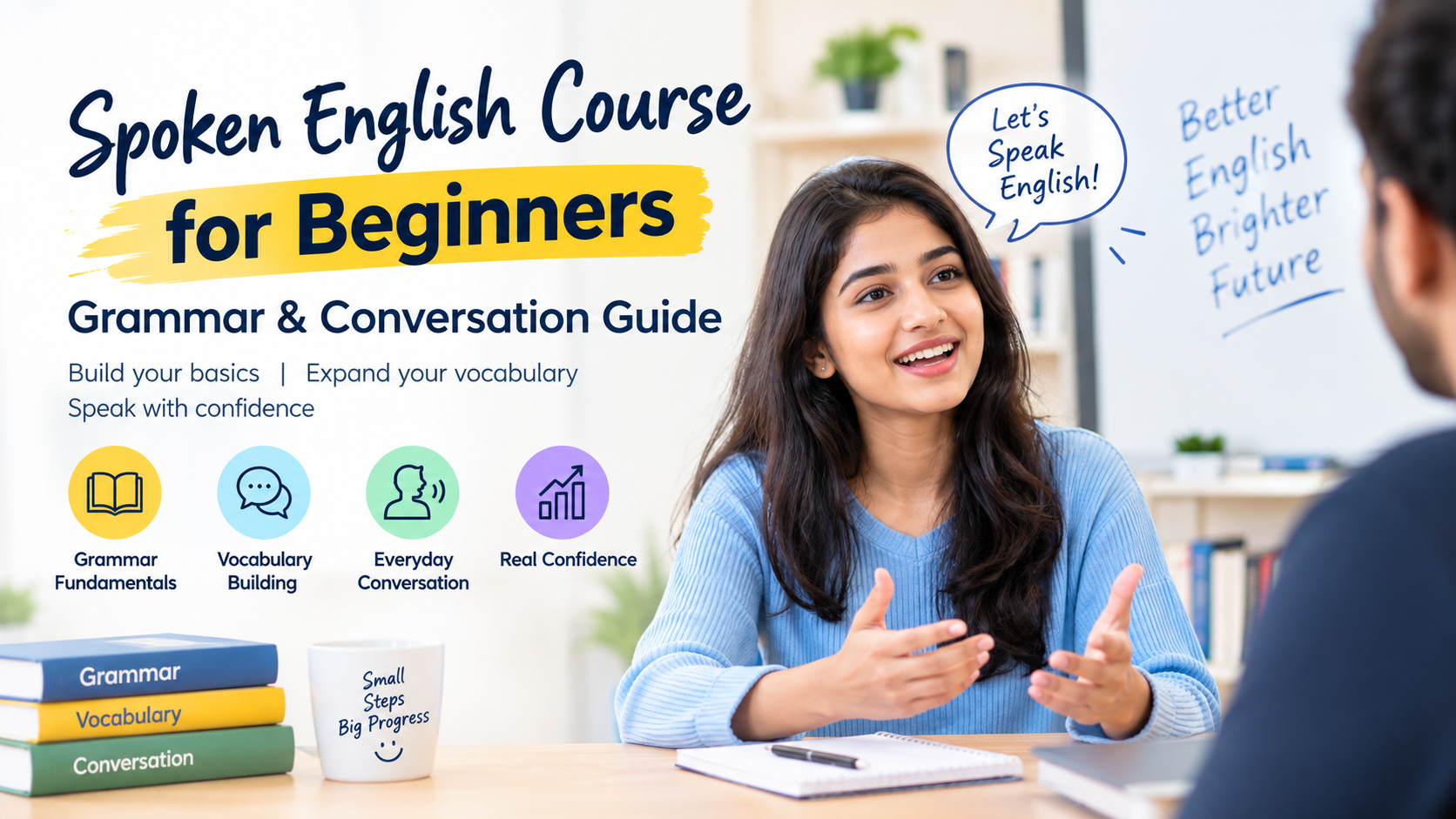
Spoken English Course for Beginners | Grammar & Conversation Guide

Spoken English Course for Beginners

Spoken English Course for Beginners

You’ve decided to finally learn English. Good. Now comes the hard part — figuring out which spoken English course for beginners is actually worth your time and money. Delhi alone has dozens of institutes promising fluency in “30 days,” and honestly, most of that is marketing noise. A real spoken English course for beginners doesn’t just throw vocabulary lists at you. The right spoken English course for beginners builds a foundation you can actually use, not just a certificate you can frame. It builds grammar fundamentals, trains your ear for everyday conversation, and — this is the part everyone skips — actually gets you talking out loud, mistakes and all.

At The Professional English in Delhi, we’ve watched learners walk in nervous about ordering coffee in English and walk out three months later handling job interviews without flinching. That transformation isn’t magic — it’s structure. This guide breaks down what a good basic english speaking course should cover, why grammar fundamentals matter, and how vocabulary building and sentence formation work together toward real confidence building.

kes a Good Spoken English Course for Beginners?

Here’s the thing: not every english course for beginners is built the same way. Some focus entirely on grammar drills; others throw you into conversation on day one with no foundation. Neither works well alone.

A properly structured spoken english course for beginners combines three things — grammar fundamentals, active vocabulary building, and guided everyday conversation — in a sequence that makes sense. Learn the rule, get the vocabulary, then practice it in a real conversation, not a worksheet.

Think about how a child learns to speak — nobody hands a toddler a grammar textbook. They hear words, copy sounds, get corrected, and try again. Adult learners just handle explicit rules faster than toddlers do.

What should you look for?

  • A clear beginner-to-intermediate roadmap, not a vague “learn at your own pace” promise
  • Live speaking practice, not just recorded video lessons
  • Grammar taught through usage, not memorization
  • Regular feedback on pronunciation and sentence formation
  • A trainer who actually corrects you in real time

Skip any spoken english course for beginners that doesn’t offer live correction. Watching videos alone builds comprehension, not speech — and that’s exactly why so many Indians read English fluently but freeze up in a meeting. The real test: does it make you talk, or just make you watch?

Grammar Fundamentals: The Skeleton of Spoken English

Grammar has a bad reputation. Most people associate it with red ink on school notebooks and boring rule charts. But in any spoken english course for beginners, grammar fundamentals aren’t the enemy of fluency — they’re what makes fluency possible.

Here’s why it matters: without grammar, “yesterday I go market” replaces “yesterday I went to the market.” People will understand you, sure, but it marks you instantly as a beginner — and in a job interview, that impression sticks.

A well-designed spoken english course for beginners teaches grammar fundamentals in digestible chunks:

  1. Tenses — present, past, and future, taught through daily-life examples
  2. Subject-verb agreement — small errors that quietly undercut confidence
  3. Articles (a, an, the) — a genuine pain point for regional-language speakers
  4. Prepositions — “in,” “on,” “at” trip up even advanced learners
  5. Question formation — how to actually ask, not just answer

We don’t teach grammar as theory at The Professional English. Every rule gets tied to a real sentence you’ll use that same week. Learn the past tense on Monday, use it describing your weekend by Wednesday. That’s how grammar fundamentals stop being rules and start being habits — and it’s the backbone of any spoken english course for beginners worth enrolling in.

Vocabulary Building That Sticks

Rote memorization doesn’t work. You’ve probably tried it — twenty new words a day, forgotten by the weekend. In any spoken english course for beginners, vocabulary building only sticks when words are learned in context, used immediately, and revisited across conversations.

A smart basic English speaking course groups vocabulary by situation, not alphabet — words for the workplace, words for shopping, words for small talk at a wedding. This context-first approach to vocabulary building means you’re preparing for a specific moment, not memorizing a random list.

Try this: pick five new words each day tied to something you’re already doing. Cooking dinner? Learn “simmer,” “season,” “chop,” “stir,” “garnish,” then use all five in one sentence before bed. That’s vocabulary building with a purpose — exactly what any decent spoken english course for beginners should push you toward.

Word families help too. Learn “confident,” and pick up “confidence,” “confidently,” and “self-assured” in the same breath. One root, four usable words. That’s efficient vocabulary building, and it compounds fast. Any spoken english course for beginners that skips this word-family technique is leaving easy progress on the table.

Sentence Formation: Turning Words Into Meaning

Knowing words isn’t the same as forming sentences — this trips up more beginners than anything else in a spoken english course for beginners. You know “yesterday,” “office,” “late,” and “reach,” but can you say “I reached the office late yesterday” without hesitating?

Sentence formation is a skill, and like any skill, it needs repetition. The standard structure in English — subject, verb, object — feels foreign if your first language follows a different order. This is precisely why a good spoken english course for beginners drills the pattern until it becomes automatic, not something you consciously calculate mid-sentence.

Here’s a simple sentence formation ladder we use in class:

Level Example Sentence Skill Practiced
Basic “I am a student.” Simple present, subject-verb-complement
Intermediate “I have been studying English for two months.” Present perfect continuous
Everyday “Could you please repeat that? I didn’t catch it.” Polite requests, natural phrasing

Notice how the “Everyday” example isn’t grammatically fancy — it’s just what people actually say. That’s the real goal of sentence formation practice in any basic english speaking course: not textbook perfection, but natural, confident speech that gets your point across without stalling. This is exactly the skill a solid spoken english course for beginners drills week after week.

Everyday Conversation: Where Theory Meets Real Life

This is where most english course for beginners programs fall short. They teach grammar and vocabulary in isolation and assume everyday conversation will magically follow. It doesn’t — conversation is its own skill: reading tone, responding quickly, recovering from mistakes without freezing.

A genuinely effective spoken english course for beginners builds everyday conversation practice into every single class, not once a week. Role-plays for ordering food, calling customer care, introducing yourself at a networking event — situations you’ll actually face in Delhi or wherever you work.

What makes everyday conversation practice effective?

  • Realistic scenarios, not scripted dialogues you memorize
  • Immediate correction, so mistakes don’t calcify into habits
  • Repetition across contexts, using the same grammar in different situations
  • Low-pressure environments, because fear kills fluency faster than mistakes do

Here’s an opinion worth stating plainly: if your english course for beginners doesn’t have you speaking out loud within the first week, you’re wasting your time. Fluency comes from talking, not from watching someone else talk. A spoken english course for beginners that delays speaking practice is, frankly, not doing its job.

Confidence Building: The Part Nobody Talks About Enough

You can know every grammar rule and still freeze the moment someone asks you a question in English. That’s not a knowledge problem — it’s a confidence problem, and arguably the biggest barrier for adult learners in India.

Confidence building isn’t a separate module bolted onto a spoken english course for beginners — it has to be woven through every class. Small wins matter: finishing a two-minute conversation without switching to Hindi, ordering food and actually being understood. A strong spoken english course for beginners creates these moments deliberately, not by accident.

A few confidence building habits that genuinely work:

  1. Record yourself speaking weekly and listen back — improvement shows up faster than you’d expect
  2. Speak English with one friend for ten minutes daily, mistakes included
  3. Celebrate fluency over accuracy early on; perfection comes later
  4. Join a structured basic english speaking course with peers at a similar level

Honestly, most learners underestimate how much confidence building matters compared to grammar drilling. We’ve seen intermediate-level students with shaky grammar outperform grammatically “correct” students in interviews simply because they spoke without hesitation. That’s the outcome a well-designed spoken english course for beginners should be chasing above everything else.

Course Comparison: What to Expect at Different Levels

Feature Beginner Level Intermediate Level
Grammar Focus Tenses, articles, basic sentence formation Complex sentences, conditionals, reported speech
Vocabulary Building 300–500 core words by theme 800–1,200 words, idiomatic phrases
Conversation Practice Guided role-plays, daily situations Free conversation, debates, presentations
Confidence Building Small group speaking, low-pressure drills Public speaking, mock interviews
Typical Duration 6–8 weeks 8–12 weeks

This table matters because a lot of learners join the wrong level and get frustrated. If you’re just starting out, a genuine spoken english course for beginners should start you in the first column, not skip you into intermediate territory because it looks impressive on a brochure. Choosing the right level often decides whether you finish confidently or drop out halfway through.

How The Professional English Structures Its Spoken English Course for Beginners

We built our basic english speaking course around one principle: you should be speaking more than you’re listening by week two. Classes are small, capped so every learner gets corrected individually rather than lost in a crowd of thirty.

Each week combines grammar fundamentals with vocabulary building tied to a theme, then closes with an everyday conversation session where you use what you learned. Sentence formation gets drilled through speaking exercises, not written homework. Confidence building runs underneath it all — trainers correct gently, never publicly.

If you’re searching for a spoken english course for beginners in Delhi that treats speaking as the main event rather than an afterthought, that’s exactly what we’ve built. We designed this spoken english course for beginners around real outcomes, not just attendance certificates.

Final Word

Learning to speak English well isn’t about finding a shortcut — there isn’t one. It’s about choosing a spoken english course for beginners that actually builds grammar fundamentals, vocabulary building, sentence formation, and everyday conversation together, with confidence building woven through every class. That combination is what separates learners who talk about improving from learners who actually do.

If you’re in Delhi and ready to start, The Professional English runs a structured spoken english course for beginners designed exactly around this approach — small batches, live correction, and speaking practice from day one. Book a free demo class and see the difference a proper basic english speaking course can make for yourself.

Frequently Asked Questions

How long does a spoken english course for beginners usually take? 

Most structured programs run six to twelve weeks, depending on how many hours you commit weekly. Consistency matters more than course length — three sessions a week beats one long session.

Can I learn spoken English without knowing grammar first?

 You can start speaking immediately, but without grammar fundamentals, mistakes get reinforced instead of corrected. A good spoken english course for beginners teaches both together, not grammar first and speaking later.

What’s the fastest way to build vocabulary for daily conversation? 

Learn words in themed groups tied to real situations — the workplace, shopping, travel — rather than random lists. Vocabulary building sticks when it’s used within 24 hours of learning it.

Is a basic english speaking course useful for working professionals? 

Yes, especially for interviews, client calls, and workplace presentations. Many professionals enroll in a spoken english course for beginners not because they can’t read English, but because speaking under pressure feels different.

How do I overcome nervousness while speaking English?

 Confidence building comes from repeated low-stakes practice — small group conversations, recorded self-practice, and trainers who correct without judgment. Nervousness fades with repetition, not willpower alone.

Do I need to memorize grammar rules to speak fluently?

 Not entirely. You need enough grammar fundamentals to avoid major errors, but fluency comes from practiced sentence formation, not rule memorization.

What should I check before enrolling in a spoken english course for beginners?

 Ask about batch size, whether classes include live speaking practice, and how often you get individual correction. A spoken english course for beginners with thirty students per batch cannot give you the attention a five-to-eight learner group can.

Is online or offline better for a spoken english course for beginners?

 Both work if the structure is right. What matters more than the format is whether the spoken english course for beginners forces you to speak every single class, not just listen.